


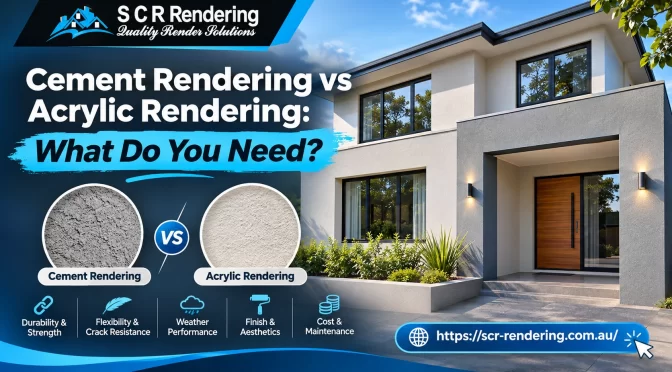
Choosing between cement rendering and acrylic rendering involves more than appearance. The right finish can influence your property’s durability, maintenance needs and long-term value. But how do you know which option suits your walls and renovation goals? Understanding the differences is a practical starting point. SCR Rendering Brisbane, a trusted residential and commercial rendering company, can help you navigate the process, explore suitable finishes and make an informed decision, including whether cement rendering or acrylic rendering in Brisbane is right for your property.
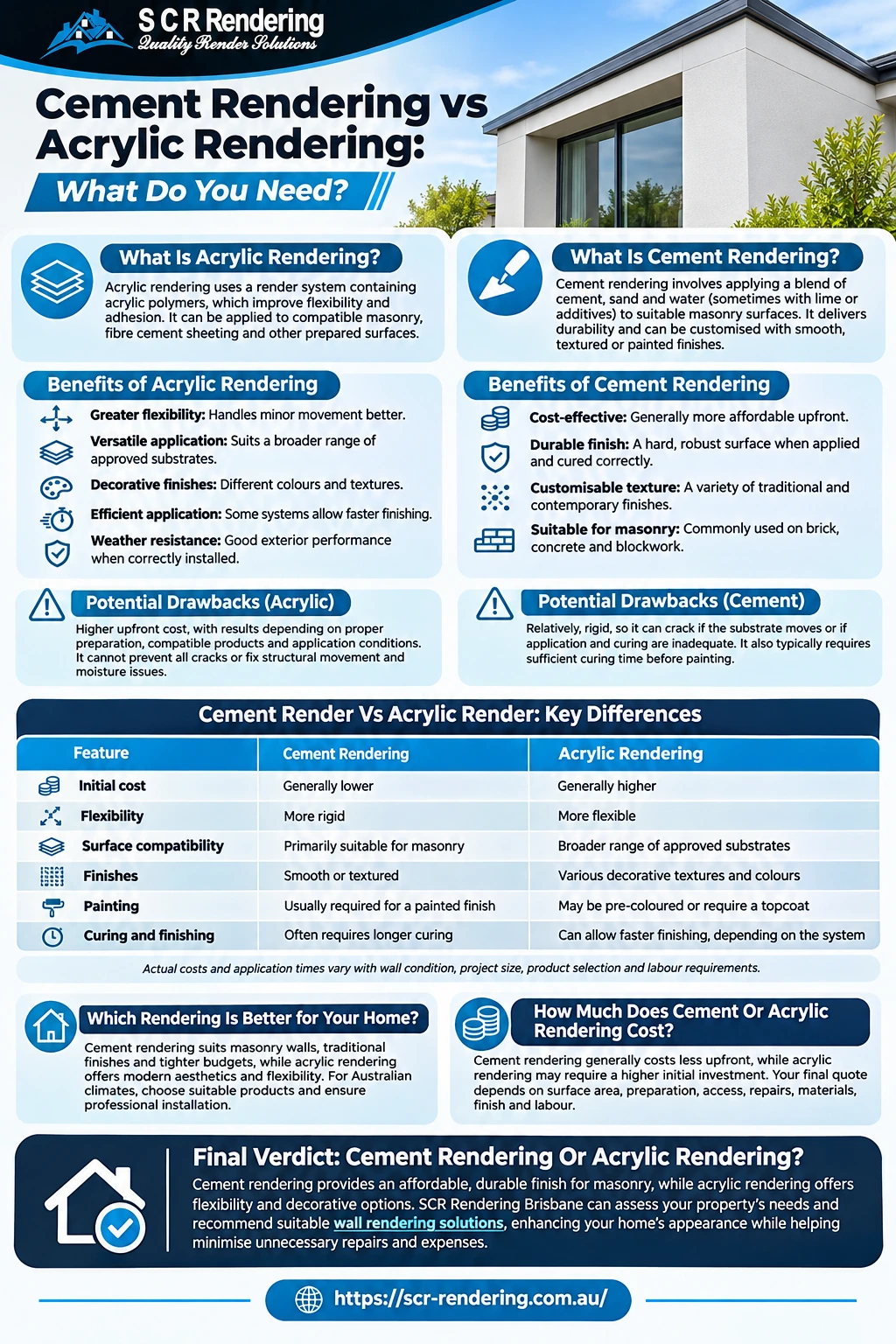
What Is Acrylic Rendering?
Acrylic rendering uses a render system containing acrylic polymers, which improve flexibility and adhesion. Depending on the product, it can be applied to compatible masonry, fibre cement sheeting and certain other prepared surfaces.
What Are the Benefits of Acrylic Rendering?
- Greater flexibility: Helps accommodate minor substrate movement better than conventional cement render.
- Versatile application: Suitable for a broader range of approved substrates.
- Decorative finishes: Available in different colours and textures, depending on the product.
- Efficient application: Some systems allow faster finishing than traditional cement render.
- Weather resistance: Quality systems can provide good exterior performance when correctly installed.
What Are the Potential Drawbacks?
Acrylic render typically involves higher upfront costs, with results depending on proper surface preparation, compatible primers, base coats, application conditions and manufacturer guidelines. SCR Rendering Brisbane ensures informed choices, but acrylic render cannot prevent all cracks or fix structural movement and moisture issues.
What Is Cement Rendering?
Cement rendering involves applying a blend of cement, sand and water, sometimes combined with lime or additives, to suitable masonry surfaces. This versatile finish delivers durability and can be customised with smooth, textured or painted surfaces to enhance your home’s exterior.
What Are the Benefits of Cement Rendering?
- Cost-effective: Generally more affordable upfront for suitable masonry projects.
- Durable finish: Provides a hard, robust surface when correctly applied and cured.
- Customisable texture: Supports a variety of traditional and contemporary finishes.
- Suitable for masonry: Commonly used on compatible brick, concrete and blockwork.
What Are the Potential Drawbacks?
Cement render is relatively rigid, making it susceptible to cracking when the substrate moves or the application and curing process are inadequate. It also typically requires sufficient curing time before painting, depending on the product and site conditions.
Cement Render Vs Acrylic Render: Key Differences
| Feature | Cement Rendering | Acrylic Rendering |
| Initial cost | Generally lower | Generally higher |
| Flexibility | More rigid | More flexible |
| Surface compatibility | Primarily suitable for masonry | Broader range of approved substrates |
| Finishes | Smooth or textured | Various decorative textures and colours |
| Painting | Usually required for a painted finish | May be pre-coloured or require a topcoat |
| Curing and finishing | Often requires longer curing | Can allow faster finishing, depending on the system |
Actual costs and application times vary with wall condition, project size, product selection and labour requirements.
Which Rendering Is Better for Your Home?
The ideal rendering option depends on your property’s needs. Cement rendering suits masonry walls, traditional finishes and tighter budgets, while acrylic rendering offers modern aesthetics and flexibility. For Australian climates, choosing suitable products and ensuring professional installation are essential for durability and performance.
How Much Does Cement Or Acrylic Rendering Cost?
Cement rendering generally costs less upfront, while acrylic rendering may require a higher initial investment. Your final quote depends on surface area, preparation, access, repairs, materials, finish and labour. Compare itemised quotes carefully, considering overall value rather than price alone.
Final Verdict: Cement Rendering Or Acrylic Rendering?
Cement rendering provides an affordable, durable finish for masonry, while acrylic rendering offers flexibility and decorative options. SCR Rendering Brisbane can assess your property’s needs and recommend suitable wall rendering solutions, enhancing your home’s appearance while helping minimise unnecessary repairs and expenses.
Start Your Rendering Project
Ready to transform your property’s exterior? Contact SCR Rendering Brisbane rendering team on 0422983942 or email scr.rendering@gmail.com for residential and commercial rendering enquiries.
Frequently Asked Queries
What Is the Main Difference Between Cement Rendering and Acrylic Rendering?
Cement rendering uses a cement-based mixture to create a durable finish on masonry walls, while acrylic rendering contains polymers that offer greater flexibility and suit a wider range of compatible surfaces.
Which Rendering Option Is Best for My Home?
Cement rendering is a great choice for suitable brick and concrete walls, while acrylic rendering is ideal for projects that require flexibility and decorative finishes. Searching for house rendering in Brisbane can help you find local professionals who can assess your property and recommend the most suitable option.
Is Cement Rendering Cheaper Than Acrylic Rendering?
Yes, cement rendering generally costs less upfront than acrylic rendering. However, the final price depends on the wall’s condition, surface preparation, repairs, accessibility, materials, labour and the finish you choose.
What Surfaces Are Suitable for Acrylic Rendering?
Acrylic rendering can be applied to compatible masonry, fibre cement sheeting and other manufacturer-approved surfaces. Professional acrylic rendering services can assess your wall material and recommend a suitable system for a durable, attractive finish.
Does Acrylic Render Crack Less Than Cement Render?
Acrylic render generally accommodates minor movement better, reducing some cracking risks. However, neither system prevents cracks caused by structural movement, poor preparation or incorrect installation.
Can Cement Rendering Be Used On Brick Walls?
Yes, cement rendering is commonly used on suitable brick walls, concrete and concrete blockwork. Experienced solid wall plastering and rendering specialists can assess your masonry, prepare the surface properly and apply a finish that suits your home.
Can I Paint Over Acrylic Render?
Some acrylic render products come pre-coloured and may not require painting, while others can be painted using a compatible coating. Always check the manufacturer’s instructions to determine whether painting is necessary and which products are suitable.
Can Rendering Improve the Appearance of Interior Walls?
Yes, rendering can create smoother, more uniform or decorative interior surfaces when the wall and product are suitable. Interior wall rendering is a practical way to refresh selected rooms, improve the appearance of uneven surfaces and achieve a consistent finish.
Can Acrylic Render Be Applied Over Cement Render?
Sometimes. The existing surface must be sound, clean and compatible with the proposed system. Loose render, moisture damage and active cracks should be assessed and addressed first.
How Do I Choose a Reliable Rendering Contractor?
Look for a contractor with relevant experience who assesses your walls, explains suitable materials and provides a clear, itemised quote. Before making a decision, ask about surface preparation, repairs, curing times, warranties and previous wall rendering projects.
Which Render Lasts Longer?
Both can last for many years when correctly specified, applied and maintained. Longevity depends on the substrate, environmental exposure, workmanship and ongoing maintenance.
Is External House Rendering Brisbane Worth the Investment?
Yes, external house rendering can improve your property’s kerb appeal, create a more consistent façade and protect suitable wall surfaces when the right system is professionally installed. The overall value depends on the condition of your home, your preferred finish, maintenance requirements and project budget.